Conversion Rate Optimization (CRO) Using Analytics: A Practical Guide
How to Analyze User Behavior, Improve Conversions, and Maximize Marketing ROI with Data-Driven Strategies
Conversion Rate Optimization (CRO) using analytics helps businesses improve website performance by analyzing user behavior and making data-driven decisions. By tracking key metrics, testing strategies, and optimizing user experience, businesses can increase conversions, reduce bounce rates, and maximize return on investment, leading to more effective and measurable digital marketing results.
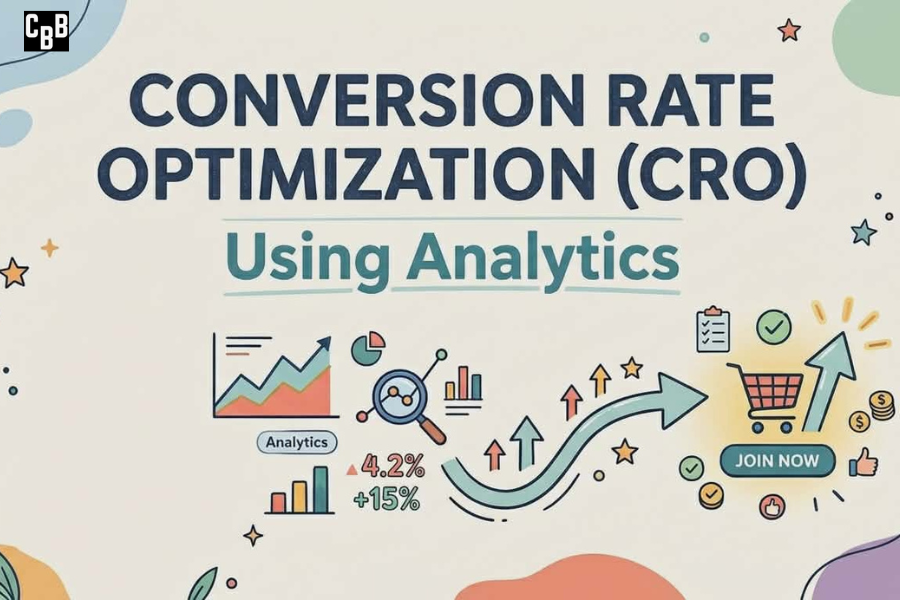
The modern competitive environment demands more than merely attracting potential customers to your site. Converting them into buyers is the true challenge. CRO is a process aimed at enhancing the number of website visitors performing a certain action – buying, registering, completing a form, etc.
The importance of CRO cannot be underestimated because it enables you to maximize conversions. Analytics help you better understand user behavior, optimize websites and campaigns, and improve the bottom line. According to recent studies, firms implementing structured CRO methods can boost their conversion rate by 20–50%. At the same time, businesses relying on analytics are much more likely to have greater ROI from marketing activities.
Conversion Rate Optimization (CRO)
Conversion Rate Optimization (CRO) refers to the optimization of a website or landing page to enhance the proportion of visitors who convert by performing a certain task. This could involve:
- Making a purchase
- Subscribing to a newsletter
- Submitting an inquiry form
- Downloading a white paper
If a website attracts 1,000 visitors and 50 visitors make a purchase, the conversion rate will be 5%. CRO aims to improve the conversion rate through optimization.
Why Are Analytics Important for CRO?
1. Determining Users' Behavior
Through analytics, one can find out how users behave on a website. They can track:
- Visited pages
- Spent time on a website
- Path through navigation
- Points at which users dropped off
For instance, when people leave a checkout page rapidly, it can show that there are problems with the design such as complex form filling or poor loading speed.
2. Bounce Rate Reduction
High bounce rate implies that users exit the website without engaging in any actions. Thus, analytics enables businesses to find out which pages have the highest bounce rate and work on improving their content or performance.
3. Optimizing the Conversion Funnel
The conversion funnel presents the process users go through before performing any action. Analytics allows identifying at which point of the funnel users exit. It helps to optimize all the stages of the conversion funnel and increase the number of conversions.
4. Making Evidence-Based Decisions
Instead of guessing what should be done next, businesses can base their actions on data.
Important Metrics in CRO
For effective CRO, companies must monitor the following metrics:
- Conversion Rate: Ratio of users who complete the intended goal
- Bounce Rate: Ratio of users exiting after looking at only one page
- Average Time on Site: Time spent by users on the website
- Click-Through Rate (CTR): Ratio of clicks on links and advertisements
- Exit Rate: Ratio of users exiting the website from a certain page
Monitoring these metrics is essential to assess performance and determine how improvements can be made.
Tools for CRO and Analysis
The following tools may assist businesses in analyzing their conversion rates and improving them:
- Google Analytics – Monitors user behavior and website traffic
- Hotjar – Offers heatmaps and sessions
- Google Optimize – Tests various page versions
- Microsoft Power BI – Generates reports and dashboards
This ensures that accurate information is gathered and used wisely.
CRO Strategies Utilizing Analytics
1. Behavioral Analysis
The first step towards implementing CRO is the analysis of users' behavior. Heatmaps and recordings allow understanding users' clicks, scrolls, and exit points from websites.
2. Optimizing Landing Pages
Since landing pages are essential for conversion rates, businesses should:
- Create clear headlines
- Implement high-quality call-to-action (CTA) buttons
- Remove any distractions
According to research, well-developed landing pages may boost conversion rates by up to 80%.
3. Enhancing Loading Speed
Website loading speed has a considerable influence on conversions. For example, it was discovered that slowing down pages by even one second decreases conversion rate by 7%. To enhance speed, businesses should optimize images, invest in reliable web hosting services, and limit number of scripts.
4. A/B Testing
The purpose of this strategy is to compare performance of different versions of the same page. Elements to be tested include:
- Headlines
- CTA buttons
- Images
- Website layouts
Continuous testing helps identify the most effective elements for improving conversions.
5. Personalize User Experience
With the help of analytics, companies can make user experiences personalizing content according to user activity. Personalization may help to boost engagement and conversions, as research indicates users' purchase probability grows by 80% with relevant content.
6. Make Filling Out Forms and Buying Easier
Complicated forms can decrease conversions. Companies are advised to:
- Make forms less complicated by reducing the number of fields
- Use autofill opportunities
- Provide detailed instructions about filling out the form
These actions will enhance users' experience and increase their ability to fill out forms.
CRO Best Practices
- Companies should use real data and not make assumptions
- Pay attention to user experience
- Constantly monitor the situation and adjust their strategy
- Pay special attention to mobile optimization
- Maintain clear communication
Following these practices, companies build trust and improve performance.
CRO Common Mistakes
- Ignore real data and make guesses
- Provide too much information on the page
- Use unclear and weak calls-to-action
- Fail to provide information optimized for mobile screens
Avoiding these mistakes will allow companies to be successful.
Conclusion
It is crucial to focus on Conversion Rate Optimization through analytics to enhance digital marketing efficiency. Through user insight, metric tracking, and optimization, organizations will be able to convert more customers and make the most out of their investment.
Organizations that analyze and optimize their performance will be well-positioned for growth in an increasingly digital world.