How Important AI Is in the Upcoming Bangladesh Job Market
Understanding how Artificial Intelligence is reshaping careers, industries, and skill demands in Bangladesh’s future workforce.
Artificial Intelligence (AI) is transforming the job market across the world, and Bangladesh is no exception. From automation in industries to smart decision-making in businesses, AI is creating new opportunities while changing traditional job roles. Students, professionals, and organizations must adapt to AI-driven skills to stay competitive in the upcoming job market.
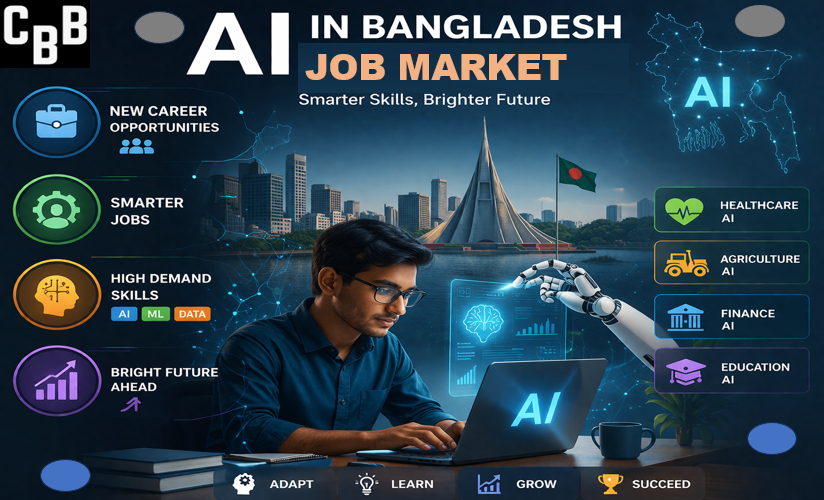
The Importance of Artificial Intelligence (AI) in Bangladesh’s Upcoming Job Market
Artificial Intelligence (AI) is no longer just a technology of the future—it is already changing the way people work around the world. AI will play a major role in shaping Bangladesh’s job market in the coming years. From automation in industry to smarter decision-making in business, AI is expected to change both the nature of jobs and the skills needed to succeed.
The Rise of AI in Bangladesh
With initiatives like the Smart Bangladesh Vision 2041, Bangladesh is rapidly moving towards digital transformation. AI is becoming a part of everyday business operations as companies adopt automation, data analytics, and machine learning systems. Industries such as banking, healthcare, education, e-commerce, manufacturing, and digital marketing have already started using AI tools.
This means that future job seekers must equip themselves with modern technical and analytical skills to stay competitive.
AI Will Create New Job Opportunities
Many people think that AI will only take away jobs, but in reality it will also create new career opportunities. Some of the emerging positions include:
- AI Engineer
- Data Analyst
- Machine Learning Specialist
- Cybersecurity Expert
- Digital Marketing Automation Specialist
- Business Intelligence Analyst
The demand for these positions is expected to increase significantly in Bangladesh as companies invest more in technology-driven solutions.
Traditional jobs will change, not disappear
AI will not eliminate all jobs, but it will change the way we work. For example:
- Bank officials will use AI-based financial tools
- Teachers will use AI-powered learning platforms
- Doctors will rely on AI-assisted diagnosis methods
- Marketers will use AI for customer targeting and analytics
So, instead of completely replacing humans, AI will work alongside professionals to increase productivity and efficiency.
Importance of AI skills for students and job seekers
Students in Bangladesh, especially those studying computer science, business, marketing, and engineering, should start learning AI-related skills early. Some of the valuable skills include:
- Data analysis
- Python programming
- Basic concepts of machine learning
- Digital tools and automation platforms
- Problem solving and critical thinking
Even non-technical students can benefit from understanding how AI tools improve workplace performance.
AI in Freelancing and Remote Work Opportunities
Bangladesh already has a strong freelancing community. With AI knowledge, freelancers can increase their income opportunities by working in the following areas:
- AI-assisted content creation
- Data labeling and annotation
- Automation services
- Chatbot creation
- Digital marketing optimization
Learning AI tools can help freelancers compete more effectively in the global market.
Barriers Bangladesh needs to overcome
While AI brings many opportunities, there are still some barriers:
- Lack of AI-focused training programs
- Limited research facilities
- Skill gap between graduates and industry needs
- Low awareness in rural areas
Universities, training institutions, and government initiatives need to work together to overcome these barriers.
Conclusion
Artificial intelligence is emerging as one of the most important drivers of future employment in Bangladesh. Rather than fearing job loss, students and professionals should focus on improving their skills to work with AI technology. Those who adapt early will have better career opportunities and a stronger position in the upcoming job market.
AI is not just the future—it is the present opportunity for Bangladesh’s workforce.